top of page
India KYC
PayPal in India supports only cross-border transactions. To safely make transfers or payments, customers had to be verified and have verified bank accounts linked. RBI guidelines required PayPal to ensure that all existing and new users were KYC compliant to use PayPal.
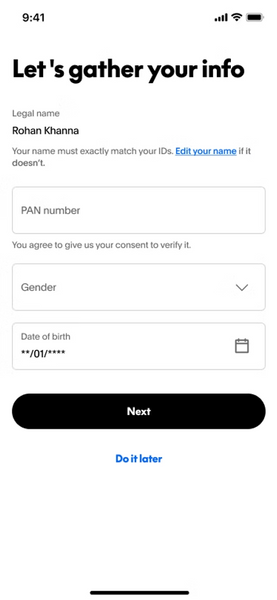
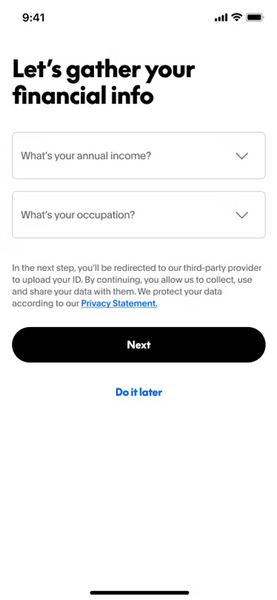
We built end-to-end KYC experiences, customised to fit India's specific needs, including Aadhaar verification through DigiLocker and video verification.
The complexity of the KYC flow made it more important for us to build out an experience that was intuitive and simple to use with clear language.
Business objectives
-
To comply with Reserve Bank of India (RBI) and PMLA regulations, PayPal India required users to complete full identity verification (KYC) and link verified bank details.
-
The goal for the experience design team was to create a KYC experience that allowed users to verify their identity or details seamlessly.
-
This would significantly increase the number of customers making payments and getting paid with PayPal.
-
Prevention of money laundering and related activities
Impact
-
Since PayPal India acted as a cross-border payment aggregator for exports, it opened up broader access for Indian exporters, consumers, and small businesses to global markets through a more regulated channel.
My Guidance
I guided the content designer on terminology and language, since this was a critical verification flow. Our priority was plain, everyday language that told users exactly what they needed to do to get verified. Working closely with the design team, we mapped out the experience and iterated until it felt simple and seamless.

Foundational work - Auditing the legacy KYC experience
The existing experience wasn’t complete and seamless for users to verify their details; it didn't have clarity on the info users needed to submit or guidance for them to submit relevant information. Since this was primarily a data collection flow, there were frequent drop-offs as well, due to ambiguous next steps, no clear verification status updates, and documents to submit. Drop-offs mostly led to contacts with users taking assistance from agents to submit documents and verify their info.
Content Strategy and terminology
There were some key language considerations we had to make to ensure that this experience was effortless. We ensured that users clearly understood what they had to do, what details they had to submit, and that sufficient guidance was available to complete the verification.
Our guidance ensured that these users successfully verified themselves and were able to transact with PayPal. Keeping these aspects in mind, the tones we used were clear, direct, helpful, and friendly.
Terminology decisions
Identity verification flows usually carry a lot of legal terms and explanations. We ensured that we delivered messages in simple, everyday language and in terminology that users in India were familiar with.
For example, " KYC" is a term that's commonly used in India for any verification process. We made sure we used that term along with "Verify your identity" at various touchpoints to help users relate and quickly complete tasks at hand.
Consumer KYC



Merchant KYC


bottom of page