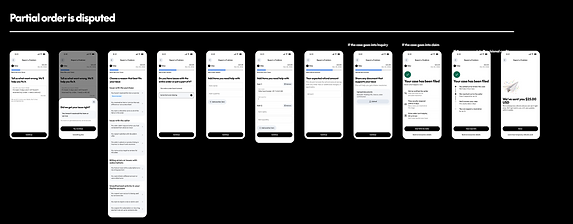
Disputes - INR filing with AI
Context
When buyers have any issues with their orders or purchases, they file disputes in the Resolution Center on PayPal, and that is then sent to sellers. Buyers can choose from multiple reasons to file a refund. PayPal will work with the seller to resolve any buyer's issue. The existing legacy filing experience was long and cumbersome for buyers. They had to input a lot of information to file a dispute.
We introduced an AI model that could intelligently classify the issue the buyer was facing and then direct them to a refund or to file a dispute based on whether the buyer was risky or trusted. This new model quickened the resolution for buyers by issuing instant refunds for eligible buyers.
This page showcases the INR (Item not received) filing flow where buyers can file a case and receive faster resolutions.
Product Metrics
-
Filing CES: Measures how easy or difficult it is for users to file a dispute
-
Self-Service Rate: Percentage of disputes filed through self-service without agent intervention.
-
CSAT: Measures users’ satisfaction with the dispute filing and resolution experience.
ARDT: Average time taken to reach a final decision on a dispute.
Business goals
-
Contact Rate: Percentage of disputes that result in customers contacting support for assistance.
-
Dispute Rate: Percentage of transactions that
-
Net Loss: Total financial losses from disputes after accounting for recoveries.
My Guidance
We reshaped the product strategy here. The original plan used the AI model late in the filing flow, only to route buyers to the right filing path. We worked with product to move it earlier: the buyer describes their issue in their own words, the model classifies it, and we send them straight to the relevant flow or, where appropriate, directly to a refund. This reduced buyer drop-offs and churn and led to faster resolutions.

Foundational work
Audit of existing experience/Gap analysis
We audited the existing filing experience to understand gaps and problems.
Some key problems that emerged -
-
Cognitive overload: too many decisions demanded in sequence, with no pacing between them
-
Internal systems language: Content is built based on how PayPal speaks internally, not how a buyer would describe them
-
Manual effort: Buyers having to add a lot of details and not leveraging or ensuring we automate info we already have
-
Lack of clarity: No indicator to tell users the progress being made and the next steps
Problem statement - Business PoV
Only 43% of 49.3M buyers who come to Resolution Center each year complete filing successfully.
- Make filing intuitive and help buyers with the right kind of support.
Problem statement - buyer PoV
“Something went wrong with my purchase. I just want it to be made right. Instead, I have to figure out what kind of dispute this is, answer questions that may not even apply to me, and then I’m left guessing about what’s happening. So, I give up, call, or go to my bank.”

Experience Strategy
A buyer who files a dispute is emotional and agitated, as something has gone wrong with their purchase. They need quick resolutions to their problems, the best solution being a refund. All buyers come to the Resolution Center with just this thought: "I want my money back." Our strategy was to turn the dispute filing process from a data collection form into an intuitive AI-based experience: one that quickly helps buyers get a resolution to their issue.
Hear the problem in the buyer’s words, ask only what’s needed, and course-correct before it costs them time or money.
-
Get the buyer's story in their own words, not how we want it
-
Ask only for what's needed, when it's needed
-
Use language that's empathetic to ease their worry and get them the resolution they are looking for. Be warm, direct, and transparent. At the end, buyers need to feel reassured about their money or purchase.
-
Info architecture - Stick to single-goal screens. For multiple tasks, they need to be prioritized for users to complete them hassle-free.
-
Avoid jargons. Use simple and everyday language.
Experience decisions
Our goal was to make the experience faster, cleaner, and more intuitive with the help of AI. Based on the buyer's input of their issues, the underlying model would categorize their issue, suggest the relevant filing path, or give them an instant refund if they were a trusted buyer.
The experience followed these principles -
-
Start with the buyer's input, customize the rest based on that
-
Case reasons suggested based on their input
-
Progressive sections asking only what's needed, again based on the trust level of the buyer
-
Clear, direct, and simple messaging helping buyers file a dispute easily.